
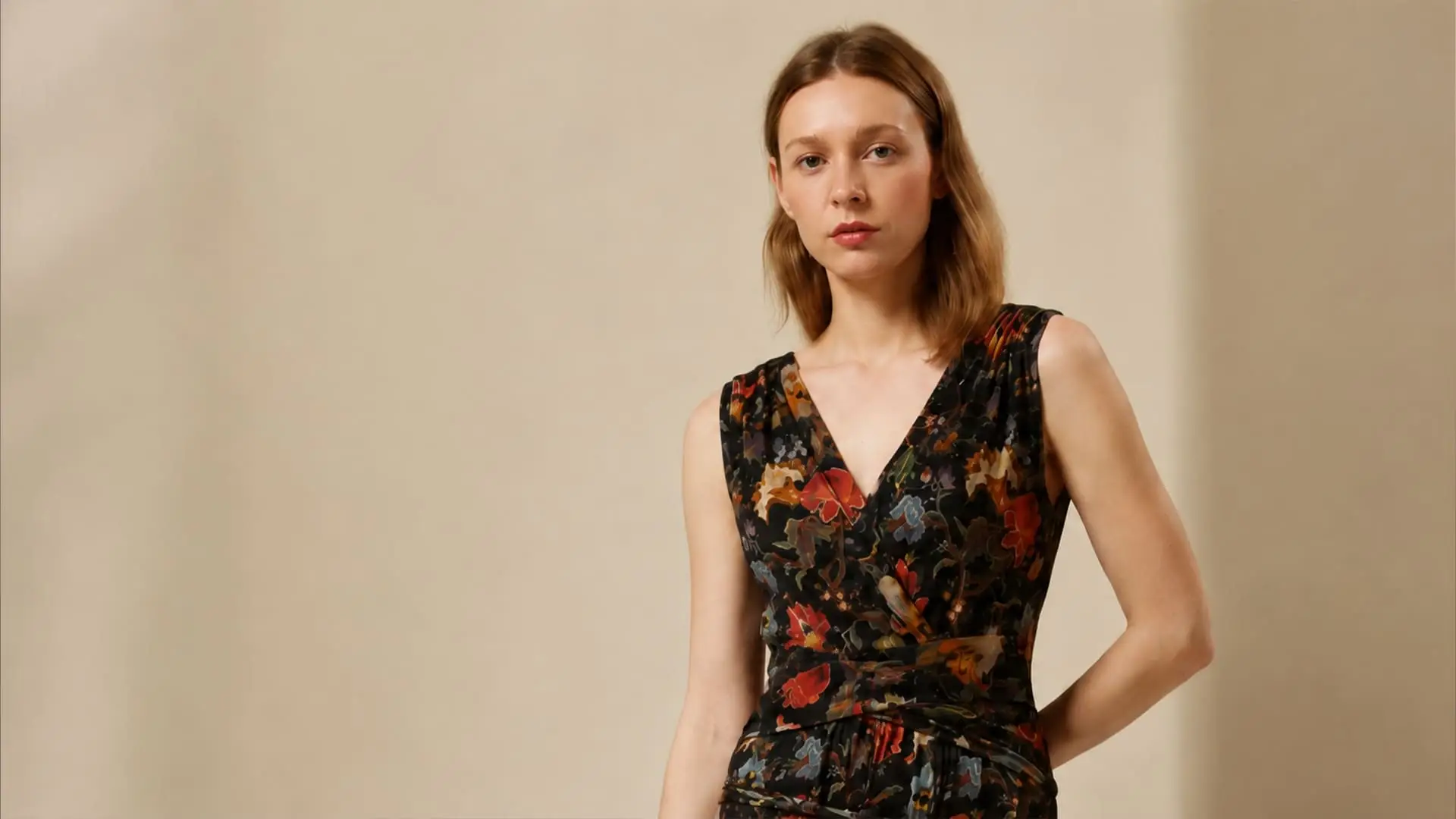
Everyone has that one dress which fits just right, feels effortless, works for several occasions, and somehow solves the familiar problem of having plenty of clothes but nothing you want to wear. When plans appear unexpectedly you automatically reach for this particular dress. Besides, when you don’t know what to wear or when you simply want an outfit that feels familiar, you reach out for this dress. However, the problem starts when that dress becomes the automatic choice for nearly every event or everything that you do. Buying an identical replacement is not the solution, when it comes to finding a dress that you will wear just as often. The key here lies in understanding why your current favorite works and using those clues to make a smarter choice.
Examine the dress that you wear repeatedly, before you’re out shopping for a new one. You will find a practical reason behind your attachment with this dress, even if you’ve never consciously considered wearing it.
Maybe the neckline is comfortable, or the waist is falling exactly where you like it. Fabric, sleeve length, color, or the fact that you can wear it with several pair of shoes may also be the main reasons for you automatically reaching out for them.
Start by asking yourself the following simple questions:
With answers to these questions, you can easily create a useful shopping profile. You don’t end up searching something that’s vaguely attractive. Rather you’ll look for the features that you already know works for you.
Even though buying an identical piece sounds sensible, you’re simply left with two dresses that compete for exactly same occasions. Instead, you must copy the following formula.
Let’s imagine that your staple is a midi dress that has a defined waist and a flowing skirt. So, for the next buy, you can consider a dress with the same midi length and fitted waist, but a different sleeve, a new neckline, or in another color family.
This way, you can avoid redundancy, while acquiring a piece that has the qualities of the one that you already love. This is like creating a variation, instead of finding a duplicate. When you’re familiar with the dress, you gain confidence. And the small differences give the dress its own purpose as well./p>
While shopping for an imaginary lifestyle is easy, it’s better to look at where you actually go. While browsing you may find a dramatic dress appealing, but it may end up spending more time hanging in your wardrobe, if your regular schedule mainly consists of casual lunches, social gatherings, daytime outings, and relaxed evenings.
Purchasing a dress that automatically fits your schedule is an essential need. With a versatile piece, you may be able to flaunt it at lunches with simple flats, evening gatherings with heeled shoes, or a casual outing with a light layer.
If you want your dress to be a part of your regular rotation, purchase it keeping your routine in mind. This can help you get better results during purchase.
You may be introduced to new shapes by latest trends. But you need a dress with a practical silhouette that offers comfort to ensure repeated wear. Your preference may automatically tilt towards dresses with fitted waists, straight shapes, flowing skirts, structured shoulders, loose sleeves, or simple column designs.
Shopping becomes considerably easier when you understand such preferences. However, never quit experimenting. You need to introduce new elements gradually for maximum impact. Try a relaxed silhouette that still provides some waist definition, if you like fitted dresses. For people preferring flowing silhouettes, experimenting with a different neckline, instead of moving immediately to a sharp, structured design can be beneficial.
Experimentation becomes much more wearable, if there are certain familiar elements.
Apart from affecting how a dress looks on the hanger, fabric also affects movement, comfort, structure, maintenance, and how often you feel like wearing the garment. With some fabrics, you can create a crisp, defined silhouette, while others fall softly around your body.
While certain materials may feel suitable for longer wears, others may require much more attention throughout the day! You must think about your favorite dress and ask yourself the following questions.
Just as much as color or pattern matters, these practical characteristics do as well, especially when you’re searching for another frequently worn piece.
You may be wearing your favorite dress due to its versatility. The color of your favorite dress may simply coordinate well with everything else in your wardrobe, making it a popular choice. The next dress doesn’t necessarily have to repeat the same shade again. Rather, the good option here is to choose a color that works well with the accessories you already own.
Take a look at your shoes, bags, jackets, belts, and jewelry and find out which color appears repeatedly. Thus, you’ll eliminate the need for building an entirely new outfit around one garment, if you purchase a dress that works with your existing accessories appropriately.
Besides, with this, you can make spontaneous styling even easier. Your goal should not be to choose the quietest color, rather your focus should be on choosing a color that naturally connects with the rest of your wardrobe.
Imagine at least three complete outfits using the items you already own, before purchasing your new dress. A few questions to ask here include the following:
The dress may not be as versatile as it initially appears, if you’re struggling to make even two outfits without the need for purchasing anything new. Thus, with the three-outfit test, you’re challenged to think beyond the dressing room. Instead of asking yourself whether you like the dress or not, you end up asking the more useful question, “How will I actually wear this?”
Whether a dress will become your favorite or will remain forgotten depends on small details. A few things to consider here include closures, straps, sleeve shapes, lining, pockets, waistbands, necklines, and hem lengths.
A minor feature that seems okay at the start, may become difficult to manage and annoying after several hours. Besides, you must also consider movement as well. Sit down, raise your arms, walk around, and consider whether you would feel comfortable wearing the dress for an extended period. Wearability is often decided through these ordinary movements rather than the first impression in front of a mirror.
Your favorite dress probably became a favorite because you repeatedly found reasons to wear it. Give your new option the same opportunity. Instead of saving it for an undefined special occasion, identify where it fits into your wardrobe immediately.
Maybe it becomes your go-to choice for daytime plans. Perhaps it works particularly well for dinners, celebrations, relaxed weekends, or occasions when you want something slightly more polished. A clear role makes the dress easier to remember when you are deciding what to wear.
Finding another dress you will actually wear is less about chasing something completely different and more about recognizing your existing habits. Your favorite dress already contains valuable information. Its fit, length, fabric, color, comfort, and versatility reveal what works for your lifestyle and personal style.
Use those clues as your shopping guide, but leave enough room for something new. Choose familiar characteristics, introduce a few fresh details, and make sure the dress works with clothes and accessories you already own. Your favorite dress does not need replacing. It simply needs some competition. And when that competition is chosen thoughtfully, deciding what to wear becomes much more interesting.